
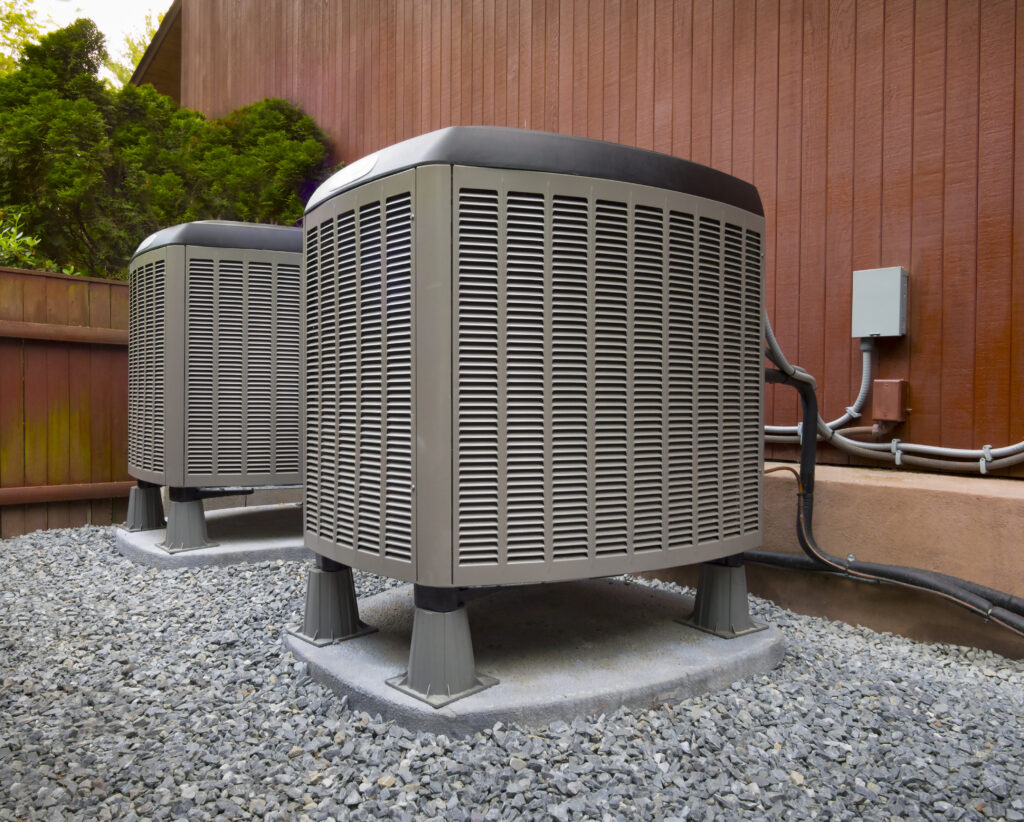
If your HVAC system isn’t working properly, it could be due to a faulty capacitor. To check if this is the case, follow these simple steps:
Why check your HVAC capacitor?
Your HVAC system has a capacitor that helps it run smoothly and efficiently. Over time, this part can degrade and cause problems with your system. That’s why it’s important to check your capacitor regularly and replace it if necessary. Here are a few reasons why you should check your HVAC capacitor: 1. To ensure your system is running efficiently 2. To prolong the life of your HVAC system 3. To avoid costly repairs When you check your capacitor, look for signs of wear and tear, such as cracks, rust or other damage. If you notice any of these signs, it’s time to replace your capacitor.
How to check your HVAC capacitor
Is your air conditioner or heat pump not working as well as it should? One of the first things you should check is the capacitor. The capacitor is a vital component in the operation of your HVAC unit, and if it is not working properly, your unit will not operate at peak efficiency. In this article, we will show you how to check your HVAC capacitor to see if it needs to be replaced. First, you need to locate the capacitor. It is usually mounted on the side of the HVAC unit, near the compressor. Once you have located the capacitor, you will need to test it to see if it is working properly. There are two ways to do this: The first way is to use a multimeter to test for continuity. To do this, set your multimeter to the continuity setting and touch one lead to each of the terminals on the capacitor. If the meter beeps or shows a reading other than zero, then the capacitor is good and does not need to be replaced. The second way to test a capacitor is with a Capacitance Meter. This is a more advanced piece of equipment, but it will give you a more accurate reading of the capacitance value. To use this tool, touch one lead from the meter to each terminal on the capacitor and read the value on the meter. The reading should be within 10% of the rated capacitance value printed on the side of the capacitor. If it is not within this range, then you will need to replace the capacitor.
What to do if your HVAC capacitor is bad
If you think your HVAC capacitor is bad, it’s important to test it before you replace it. While capacitors are not expensive, they are an electrical component, so if you replacing it and it’s not bad, you’ve wasted money. To test your capacitor, you will need a multimeter that can measure microfarads (µF). First, locate the capacitor. It will be a cylindrical device, usually silver or black, with two wires coming out of the top. One wire will be labeled “Common,” the other will have a number next to it denoting the microfarad rating of the capacitor (ex. 35 + 5 MFD). The “Common” wire will always be connected to the compressor start winding; the numbered wire will be connected to either the run winding or the fan winding. To test your capacitor, set your multimeter to measure microfarads and touch one probe to each of the wires coming out of the top of the capacitor. If the reading is close to the number on the side of the capacitor, it is good. If not, it needs to be replaced.
Replacing your HVAC capacitor — why this is a call, not a DIY job: capacitors store a dangerous electrical charge even after power is switched off and don’t reliably self-discharge on their own. Technicians use an insulated discharge tool before ever touching one. If you’re seeing the signs above, call (602) 932-0124 and we’ll replace it safely.
Tips for checking and replacing your HVAC capacitor
Your HVAC system’s capacitor provides the power that helps your system to start up and keep running. Over time, the capacitor can become worn out and may need to be replaced. Here are some tips for checking and replacing your HVAC capacitor: -First, check the voltage rating of the capacitor. This should be consistent with the voltage rating of your HVAC system. -Next, check the capacitance of the capacitor. This should be within 10% of the manufacturer’s recommended value for your HVAC system. -If either the voltage rating or capacitance is outside of the recommended range, then you will need to replace your HVAC capacitor. -To replace your HVAC capacitor, first disconnect power to your HVAC system. Then, remove the old capacitor and install the new one in its place. Finally, reconnect power to your HVAC system and test it to make sure it is working properly.
FAQ’s about HVAC capacitors
Q: What is an HVAC capacitor? A: An HVAC capacitor is a device that helps the blower motor start and keeps it running smoothly. It temporarily stores electrical energy and then releases it as a boost when the blower motor starts. Q: How do I know if my HVAC system needs a new capacitor? A: One way to tell if your system needs a new capacitor is if the unit is taking longer than usual to start up. If you hear a humming noise coming from your unit, that could also be a sign that the capacitor needs to be replaced. Q: How often do I need to replace my HVAC system’s capacitor? A: The lifespan of an HVAC system’s capacitor depends on many factors, such as how often the unit is used and the quality of the capacitor itself. In general, though, most capacitors will need to be replaced every 3-5 years. Q: Can I replace my HVAC system’s capacitor myself? A: While it is possible to replace an HVAC system’s capacitor yourself, it is generally recommended that you leave this task to a trained professional. Attempting to replace the capacitor yourself could result in damage to your unit or injury to you if you are not familiar with how to safely work with electrical components.
HVAC capacitor troubleshooting guide
If your HVAC system isn’t running as efficiently as it should, or if it’s not running at all, there could be a problem with the capacitor. This guide will help you troubleshoot the issue so you can get your HVAC system up and running again. What is a capacitor? The capacitor is a small electrical component in your HVAC system that helps to start the compressor and condenser fan. If the capacitor is not working properly, the compressor and fan will not start, or they will not run at full capacity, which can cause your HVAC system to run less efficiently. How can I tell if my HVAC system’s capacitor is bad? There are a few signs that may indicate that your HVAC system’s capacitor is going bad or has already failed. If you notice any of the following, it’s time to call a professional for help: -HVAC system isn’t running at all -HVAC system seems to take longer than usual to cool or heat your home -HVAC compressor is making noise -HVAC fans are not running at full speed -HVAC unit seems to be constantly cycling on and off
How to test your HVAC capacitor
A capacitor helps your HVAC unit start up by giving it a boost of energy. Over time, however, the capacitor can weaken, which can lead to problems with your unit. You can test your HVAC capacitor at home with a multimeter to see if it needs to be replaced. Here’s how to test your HVAC capacitor: -Turn off the power to your HVAC unit. -Remove the access panel to your unit. -Locate the capacitor and use your multimeter to test it for continuity. -If the multimeter does not register continuity, then the capacitor needs to be replaced.
When to check your HVAC capacitor
If your HVAC system is running constantly, isn’t providing enough cooling or heating, or isn’t blowing air as hard as it used to, there’s a good chance your capacitor has gone bad and needs to be replaced. You should also check your capacitor if your HVAC system won’t turn on at all.
Why do HVAC capacitors go bad?
HVAC capacitors are electrical components that are used to store and release electrical energy. Just like any other electrical component, they can eventually wear out and need to be replaced. There are a few reasons why HVAC capacitors go bad: – old age – corrosion – overvoltage – understatement


